| Researchers | Ayan Khan, Aiza Akhtar Chaudhry and Ibrahim Saghir |
| Time Frame | Fall 2025 |
| Supplementary Materials | The Galileo Oscillator |
| Description | |
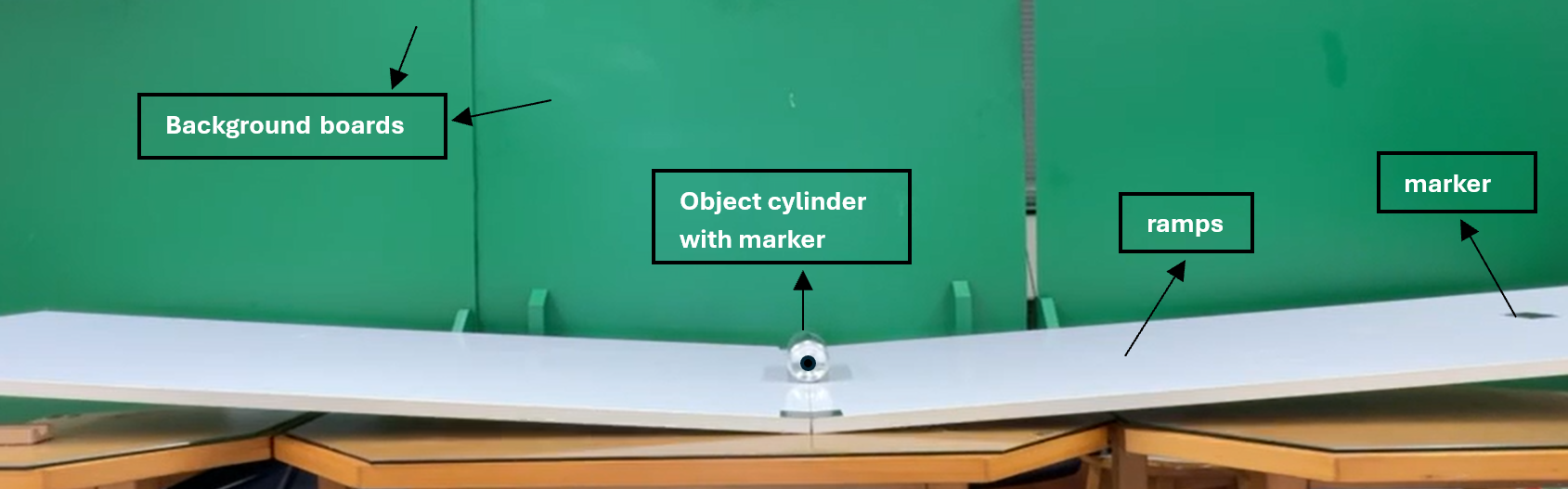
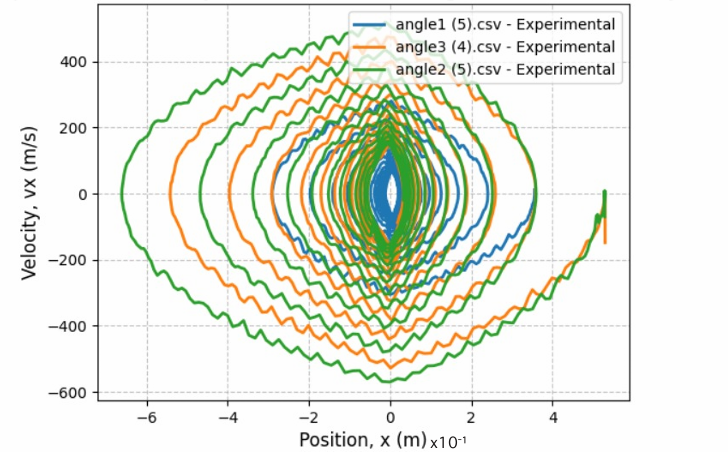
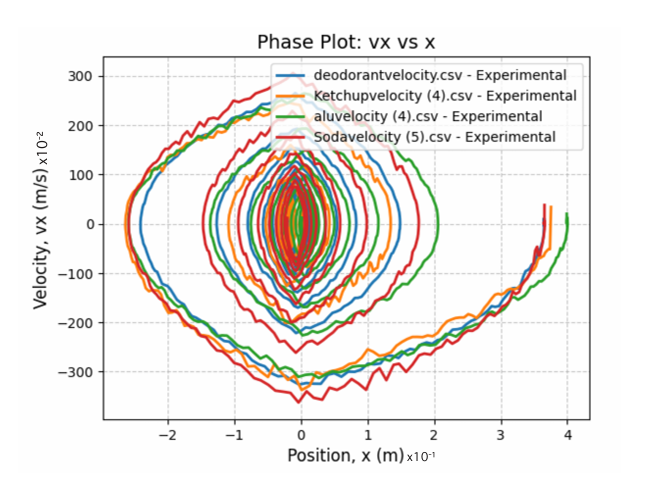
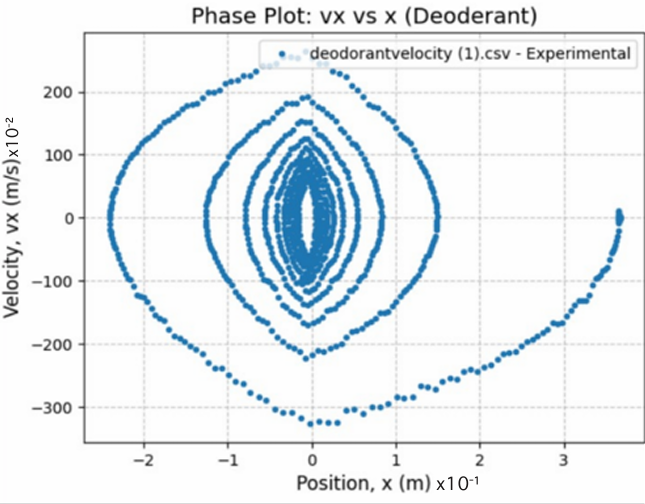
In this experiment, we explored how different cylindrical objects roll and lose energy on a V-shaped ramp, aiming to understand how their internal structure, the type of fluid they contain, the fluid’s viscosity, and the ramp’s angle influence their motion. By carefully analysing displacement vs time and velocity vs displacement graphs, we were able to see how energy is retained or lost in each case.
Solid cylinders, with their uniform internal structure, tended to keep their mechanical energy longer and showed less damping, moving more smoothly along the ramps. Cylinders that were almost fully filled with fluids, on the other hand, experienced noticeably higher damping because the fluid inside moved independently, creating internal friction and dissipating energy more quickly. Among these, the cylinders with more viscous fluids showed even greater damping, as the internal fluid causes greater damping. This eventually slows the transfer of momentum and causes the cylinders to lose energy faster. We also observed the effect of ramp angle. Increasing the angle of one ramp caused the cylinders to travel farther on the opposite ramp. This happened because a steeper ramp gave the cylinders more potential energy at the start, which converted into greater kinetic energy as they rolled down. This allowed them to cover a longer distance.
Overall, the experiment highlighted how factors like internal structure, fluid properties, and ramp angle influence the motion and energy dissipation of rolling cylinders, providing a clear picture of how damping occurs in these systems. | |