Measuring solar altitude using medieval instruments | PhysLab

  • Home
  • About Us
    • Overview
    • Centre for Experimental Physics Education (CEPE)
    • Physlab Team
    • Physlab Guidebook
    • Alumni
    • Open Positions
    • Muhammad Sabieh Anwar (Personal)
  • Academics
      • Lab Courses
      • Lab-I (ENGG-100/PHY-100/200)
      • Lab-II (PHY 300/500)
      • AstroLAB
      • Ibn Sahl Corner for Optics
      • Smart Physics
      • Single Photon Quantum Mechanics Lab
      • Chasing Cosmic Ray Muons at Physlab
      • Stories
      • Physics Studio
      • Research Stories
      • Class Activities
      • Courses Taught
      • Video Recordings of Lectures
      • Class Demonstrations
      • PhysDiary
      • Health and Safety
      • Lab Safety
      • Workplace Organization
  • Research
    • Research Themes
    • Research Internships
    • Research Stories
    • Physics WorldCup
      • International Young Physicists’ Tournament (IYPT) 2019
      • International Young Physicists’ Tournament (IYPT) 2018
      • International Young Physicists’ Tournament (IYPT) 2016
    • Hunerkada
    • Grants
    • Theses and Reports
    • Scientific Publications
    • Invited Talks (Selected)
  • Outreach
    • Media
      • Lectures, Podcasts and Interviews
      • Videobytes
      • YouTube Channel
      • Visitors
      • Testimonials
    • The Scientific Mind Through the Eyes of a Physics Experimenter
    • National Laboratory Immersion Program
      • First Lahore 2012
      • Second Sukkur 2013
      • Third Lahore 2014
      • Fourth Lahore 2016
    • Labview Workshop 2016
    • Open house
      • 2009-2015
      • Open house 2023
    • Khwarizmi Science Society
    • Helping Pakistan’s Universities
      • National University of Technology (NUTECH) 2019
      • Pakistan Institute of Engineering and Applied Sciences
        (PIEAS) 2019 (Final Phase)
      • Pakistan Institute of Engineering and Applied Sciences
        (PIEAS) 2019 (Phase 2)
      • Pakistan Institute of Engineering and Applied Sciences
        (PIEAS) 2018 (Phase 1)
      • National University of Science & Technology 2016
      • Habib University 2014
      • Preston University 2013
      • Ghulam Ishaque Khan Institute of
        Engineering Sciences and Technology 2011
      • Institute of Space Technology 2010
    • The National STEM School
      • STEM School (2018 – 2019)
      • STEM school (2016 – 2017)
    • Abdus Salam Memorial Lecture Series
  • Facilities
    • Laboratories
    • Equipments
    • Devices & Softwares
      • PhysPlot
      • Physlogger
      • Phystrack
    • Mechanical Workshop
    • Inventory
    • 3D Printed Galleria
    • Forms
    • Equipment Howto’s
  • PhysGPT
  • Contact Us

Measuring solar altitude using medieval instruments

Home \ story
Researchers Mirza Sarim Ahmed Beg
Time Frame Fall 2025
Supplementary Materials Sarim’s report on historical instruments to measure solar altitude
Construction notes for the triquetrum
Supplementary Materials Blueprint for constructing the quadrant
Description
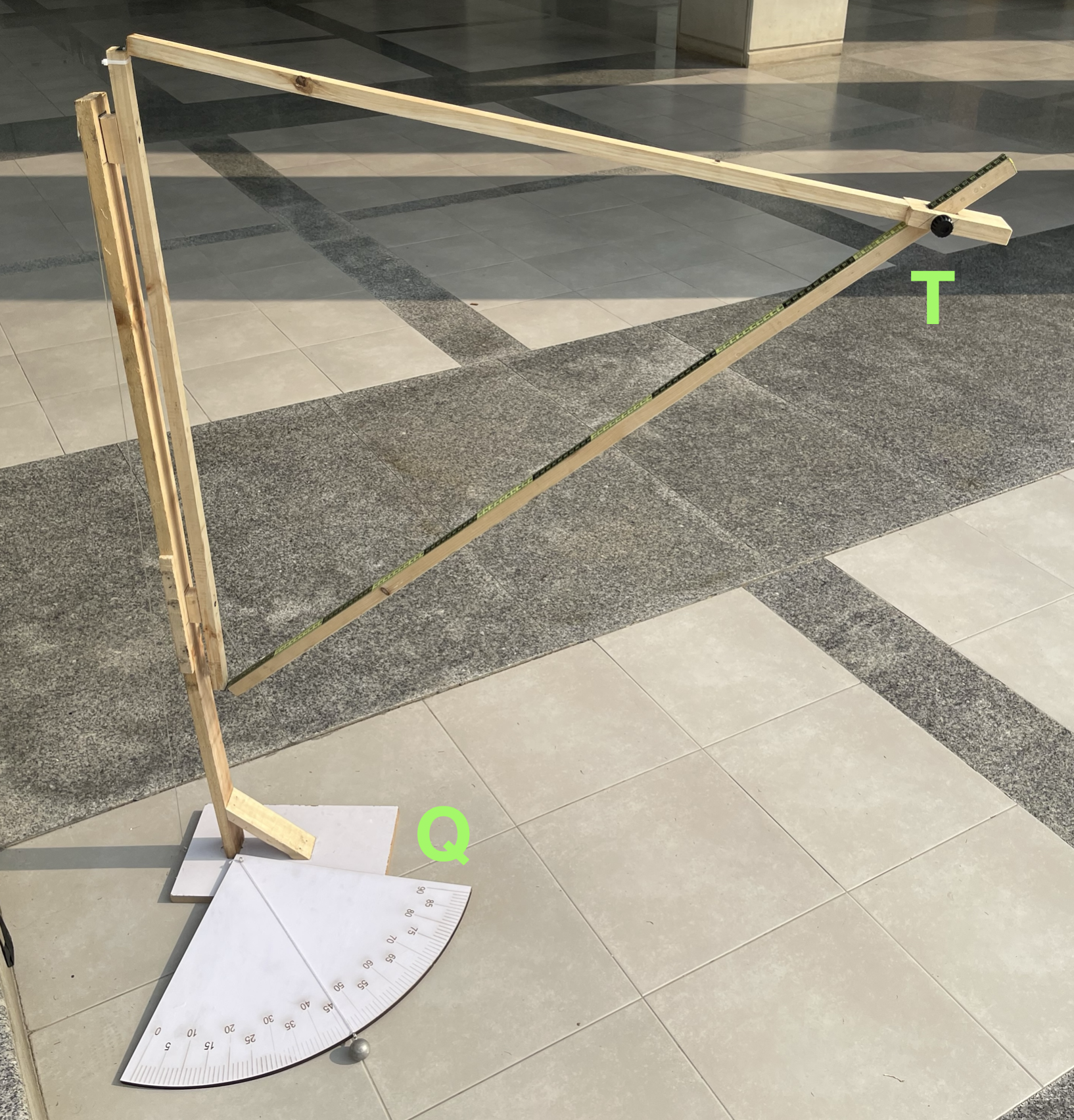
Historical astronomical instruments, such as the quadrant and the triquetrum, were integral to the development of observational astronomy from the time of Ptolemy through the Islamic Golden Age and the European Renaissance. This study investigates the practical accuracy and educational utility of these tools by designing and constructing functional replicas using CNC engraving techniques.


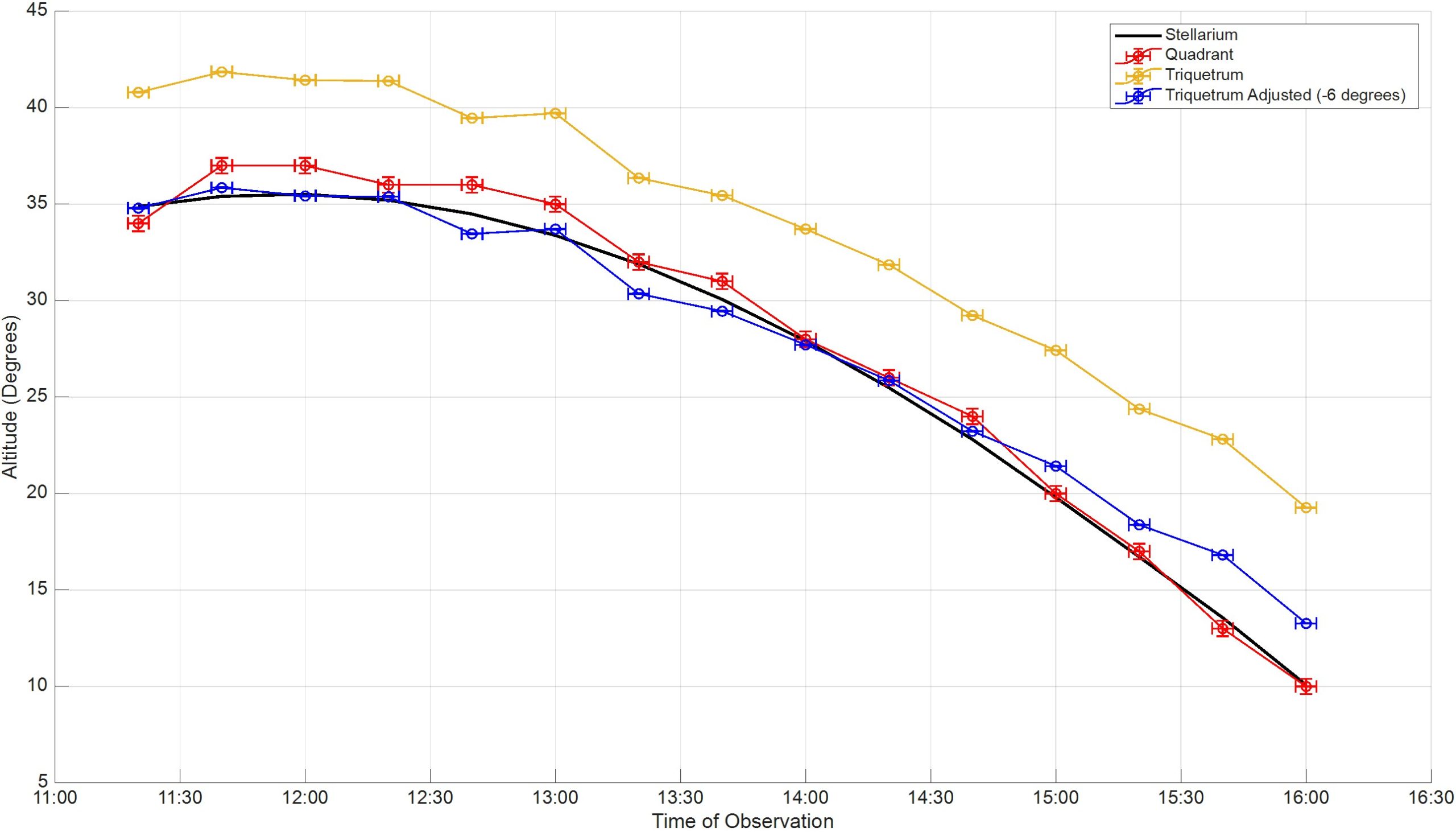
To evaluate their performance, solar altitude measurements were recorded over a five-hour period and compared with precise data from the Stellarium software. While the quadrant demonstrated high alignment with Stellarium’s computational models, the triquetrum exhibited a zero offset of approximately +6° due to structural flexing of its wooden stand.

Potential design refinements using rigid materials are discussed, and it is concluded that these instruments can serve as effective pedagogical tools for introducing students to the history of science and the fundamentals of celestial observation, especially in medieval times.


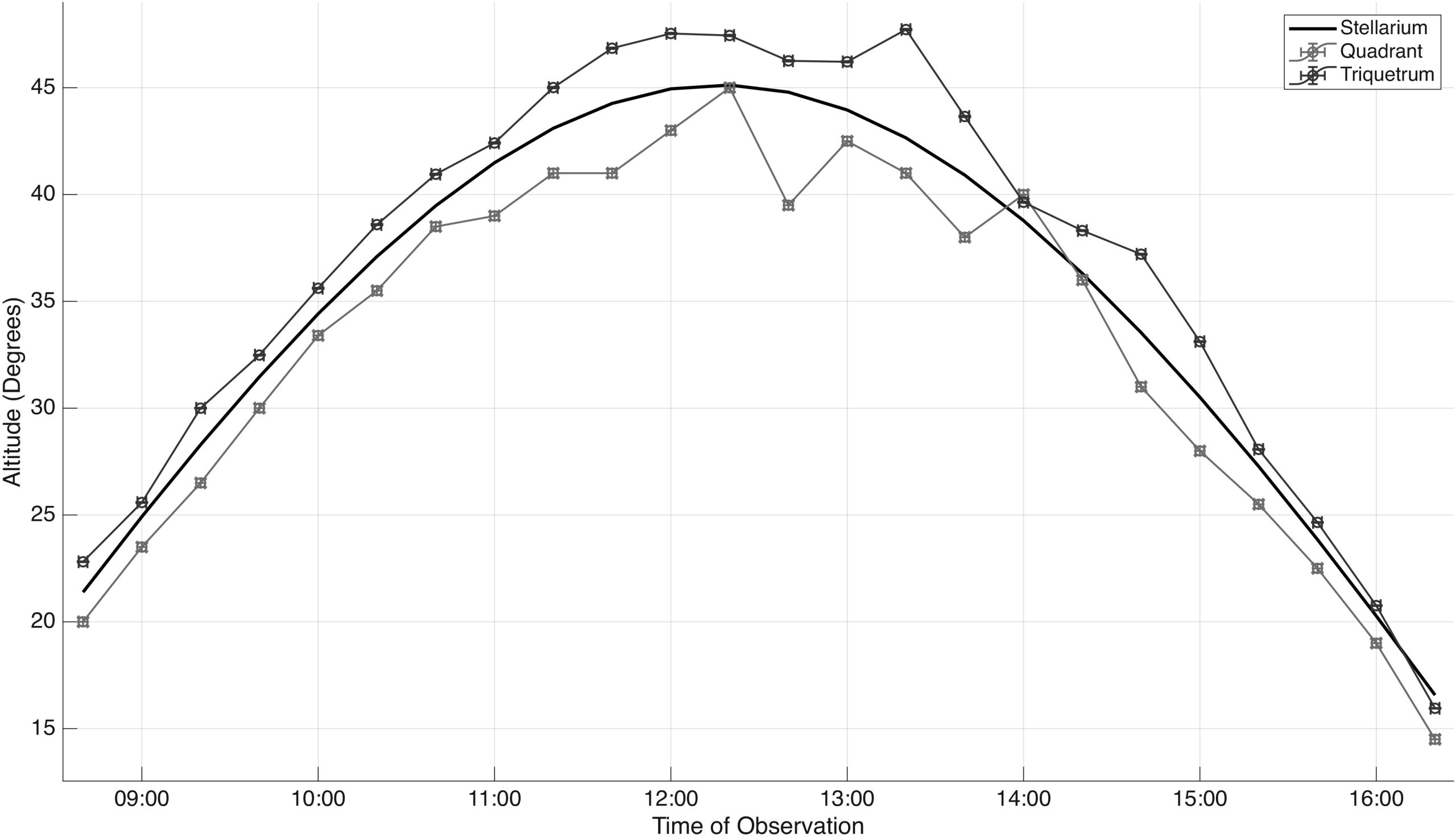
After some adjustments and improvements to the hardware, fresh data was acquired on 13th of February, 2026, which is shown here.


Highlights . News . Research Stories | Tags: astrolab, astronomy
Previous

Interrupting the swing of a pendulum

Next

A do-it-yourself potentiostat for cyclic voltammetry

PhysLab

Preparing an institutional and national platform for student-driven experimental research in physics.

CONTACT US

Email: physlab.org@gmail.com Telephone: 111-11-LUMS (5867) Address: Lahore University of Management Sciences (LUMS), Sector U, DHA, Lahore Cantt. 54792, Pakistan
TOP
© 2007-2024 PhysLAB, Lahore University of Management Sciences - All Rights Reserved.
  • Home
  • About Us
    • Overview
    • Centre for Experimental Physics Education (CEPE)
    • Physlab Team
    • Physlab Guidebook
    • Alumni
    • Open Positions
    • Muhammad Sabieh Anwar (Personal)
  • Academics
    • Lab Courses
    • Lab-I (ENGG-100/PHY-100/200)
    • Lab-II (PHY 300/500)
    • AstroLAB
    • Ibn Sahl Corner for Optics
    • Smart Physics
    • Single Photon Quantum Mechanics Lab
    • Chasing Cosmic Ray Muons at Physlab
    • Stories
    • Physics Studio
    • Research Stories
    • Class Activities
    • Courses Taught
    • Video Recordings of Lectures
    • Class Demonstrations
    • PhysDiary
    • Health and Safety
    • Lab Safety
    • Workplace Organization
  • Research
    • Research Themes
    • Research Internships
    • Research Stories
    • Physics WorldCup
      • International Young Physicists’ Tournament (IYPT) 2019
      • International Young Physicists’ Tournament (IYPT) 2018
      • International Young Physicists’ Tournament (IYPT) 2016
    • Hunerkada
    • Grants
    • Theses and Reports
    • Scientific Publications
    • Invited Talks (Selected)
  • Outreach
    • Media
      • Lectures, Podcasts and Interviews
      • Videobytes
      • YouTube Channel
      • Visitors
      • Testimonials
    • The Scientific Mind Through the Eyes of a Physics Experimenter
    • National Laboratory Immersion Program
      • First Lahore 2012
      • Second Sukkur 2013
      • Third Lahore 2014
      • Fourth Lahore 2016
    • Labview Workshop 2016
    • Open house
      • 2009-2015
      • Open house 2023
    • Khwarizmi Science Society
    • Helping Pakistan’s Universities
      • National University of Technology (NUTECH) 2019
      • Pakistan Institute of Engineering and Applied Sciences
        (PIEAS) 2019 (Final Phase)
      • Pakistan Institute of Engineering and Applied Sciences
        (PIEAS) 2019 (Phase 2)
      • Pakistan Institute of Engineering and Applied Sciences
        (PIEAS) 2018 (Phase 1)
      • National University of Science & Technology 2016
      • Habib University 2014
      • Preston University 2013
      • Ghulam Ishaque Khan Institute of
        Engineering Sciences and Technology 2011
      • Institute of Space Technology 2010
    • The National STEM School
      • STEM School (2018 – 2019)
      • STEM school (2016 – 2017)
    • Abdus Salam Memorial Lecture Series
  • Facilities
    • Laboratories
    • Equipments
    • Devices & Softwares
      • PhysPlot
      • Physlogger
      • Phystrack
    • Mechanical Workshop
    • Inventory
    • 3D Printed Galleria
    • Forms
    • Equipment Howto’s
  • PhysGPT
  • Contact Us